



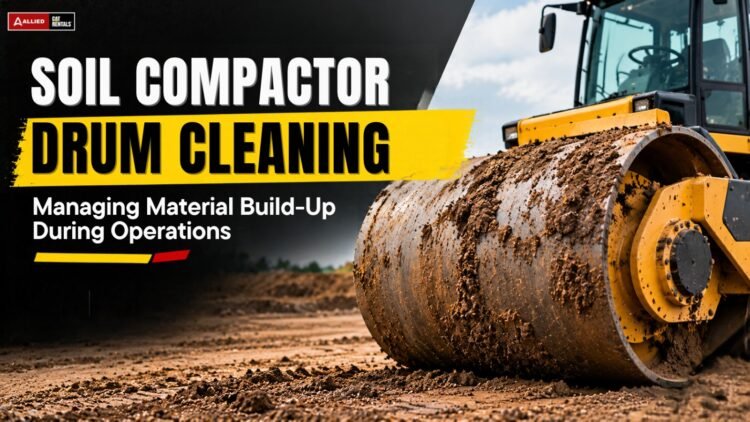
Soil compactors play an important role in preparing and stabilizing ground for construction projects. They help compact soil by applying pressure and, depending on the machine, vibration. However, during operation, soil, clay, and other materials can stick to the compactor drum. This material build-up can affect the drum’s contact with the ground and make it harder to achieve consistent compaction.
Understanding soil compactor drum cleaning helps operators maintain suitable working conditions and achieve more consistent results across different surfaces.
Why Does Material Build-Up Occur on Compactor Drums?
Material build-up commonly occurs when a soil compactor works on damp soil, sticky clay, or ground containing fine particles. Moisture makes some materials more likely to stick to the drum surface, especially when soil conditions are unsuitable for compaction.
The amount of build-up depends on the soil type, moisture content, drum design, and operating conditions. Smooth drums and padfoot drums may collect material differently, so cleaning requirements can vary according to the machine and the ground being treated.
How Does Material Build-Up Affect Compaction?
Uneven Contact With the Ground
A layer of soil stuck to the drum can change the contact between the drum and the working surface. This may affect how consistently pressure is applied across the area being compacted.
Reduced Compaction Consistency
When material accumulates unevenly, the drum may not perform as intended. Operators may notice differences in surface appearance or compaction results, making it important to inspect the drum regularly.
Increased Cleaning Requirements
Heavy build-up can require additional cleaning time and interrupt planned operations. Managing material accumulation early can help reduce unnecessary interruptions during a work shift.
How to Manage Soil Compactor Drum Build-Up
1. Check Soil Moisture Conditions
Before starting compaction, assess the condition of the soil. Excessively wet or sticky material can increase the likelihood of build-up. Soil moisture should be suitable for the required compaction work, following project specifications.
2. Inspect the Drum Regularly
Operators should check the drum during routine work breaks and look for accumulated soil, clay, or debris. Early identification makes it easier to address build-up before it becomes difficult to remove.
3. Use Suitable Cleaning Methods
Remove accumulated material using cleaning tools and methods approved by the equipment manufacturer. Avoid damaging the drum surface, scrapers, seals, or other components during cleaning. The machine should be parked securely, and all applicable shutdown and safety procedures must be followed before anyone approaches or cleans the drum.
4. Check Drum Scrapers
Where fitted, drum scrapers help remove soil and debris from the drum surface during operation. Inspect them for wear, damage, and correct positioning. Damaged or poorly adjusted scrapers may allow material to accumulate more easily.
5. Match Operating Conditions to the Soil
Different soil types require different operating approaches. Adjusting the compaction process according to soil conditions and project requirements can help manage material build-up. Operators should follow the manufacturer’s instructions for machine settings, speed, and vibration.
The Importance of Routine Maintenance
Regular inspection and maintenance help keep a soil compactor ready for work. Cleaning the drum, checking scraper condition, and identifying worn components can help prevent small issues from affecting daily operations.
Equipment maintenance records can also help identify recurring problems. For example, if material repeatedly accumulates during work on a particular type of soil, reviewing the operating conditions may help determine whether changes to moisture management, cleaning frequency, or equipment setup are needed.
Frequently Asked Questions
1. Why does soil stick to a compactor drum?
Soil may stick to the drum because of high moisture content, clay-rich material, or sticky ground conditions. The amount of build-up depends on the soil and the drum configuration.
2. How often should a soil compactor drum be cleaned?
The drum should be inspected regularly during operation and cleaned whenever material build-up affects its performance or when required by the maintenance schedule. Working conditions determine how frequently cleaning is necessary.
3. What is the purpose of a drum scraper?
A drum scraper helps remove soil and debris from the drum surface as it rotates. Proper inspection and maintenance help it perform its intended function.
4. Can material build-up affect compaction quality?
Yes. Uneven material accumulation can affect drum contact with the ground and may contribute to inconsistent compaction results.
5. How can operators prevent excessive drum build-up?
Operators can monitor soil moisture, inspect the drum regularly, maintain scrapers, use approved cleaning methods, and follow the manufacturer’s operating recommendations.
Conclusion
Soil compactor drum cleaning is an important part of maintaining consistent compaction and efficient equipment operation. Material build-up can occur when working with damp soil, sticky clay, and other challenging ground conditions. Regular drum inspections, suitable cleaning methods, and proper scraper maintenance help manage this issue. By paying attention to soil conditions and following recommended maintenance procedures, operators can support reliable compaction work and reduce unnecessary interruptions on construction sites.