The Calm Before the Storm: A Costly False Sense of Security
Imagine this: It’s a typical busy day on your project site. The grid power flickers and dies. Your backup generator roars to life on cue. The lights stay on, and the team breathes a sigh of relief. All seems well. But what you don’t know is that your generator is suffering from “wet stacking”—a condition where unburned fuel and carbon clog the engine because it never runs at full capacity. It’s producing just enough power for today’s load, but it’s slowly dying.
Then, a week later, during a critical, high-demand operation, the grid fails again. This time, the generator starts, struggles under the sudden load, and fails catastrophically. The result? A paralyzed site, spoiled materials, missed deadlines, and a repair bill that runs into millions.
This isn’t a horror story; it’s a common reality for sites that skip the most critical test for any backup power system: Load Bank Testing.
What is a Load Bank Test? The Gym Session for Your Generator
Think of your standby generator as a star athlete. You wouldn’t send an athlete to run a marathon without knowing they can handle the distance, right? A generator is the same. Running it lightly with no load is like an athlete strolling to the corner shop. It doesn’t prove anything.
A Load Bank Test is the generator’s equivalent of a full-pressure, high-intensity workout.
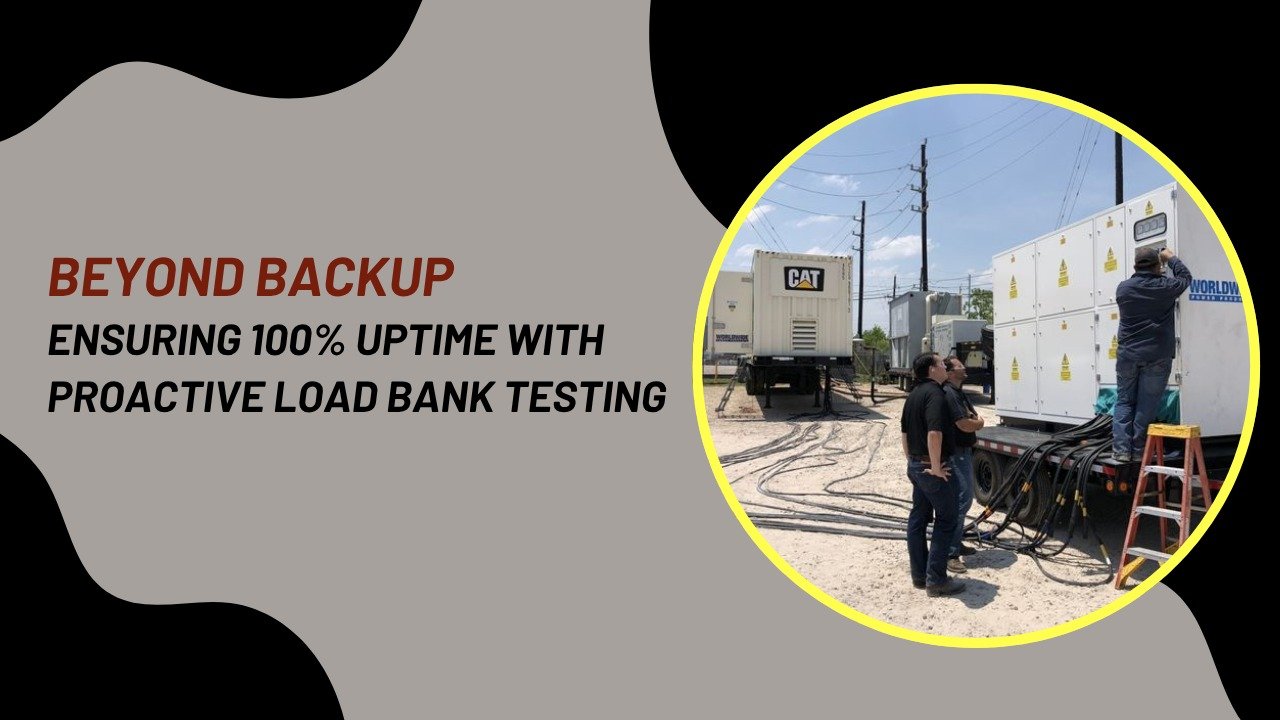
In technical terms, a load bank is a piece of equipment that places an artificial electrical load on a generator, allowing it to be tested at its full, nameplate kW capacity. It forces the generator to prove it can do the job it was designed for, under controlled conditions, before an actual emergency strikes.
The Three Silent Killers That Only a Load Bank Test Can Uncover
Routine maintenance checks the oil and filters, but it can’t reveal these critical, hidden failures waiting to happen:
1. Wet Stacking: The Silent Engine Killer
This is the most common issue with under-utilised diesel generators. When a generator consistently runs at less than 60-70% of its rated kW capacity, it doesn’t reach its optimal operating temperature. This leads to incomplete combustion, causing unburned fuel and soot to accumulate in the exhaust system. Over time, this gunk can cause severe engine damage and a dramatic loss of power. A load bank test burns this crap out, clearing the system and validating the engine’s health under a full load.
2. The “False Start” Fallacy
Your generator might start and run smoothly with no load. But can it handle the sudden, massive demand when your entire site’s HVAC, machinery, and lighting kick in simultaneously? A weak fuel injector, a failing turbocharger, or a tired battery will only reveal itself under the stress of a full load. A load bank test simulates this “real-world” startup surge, ensuring your generator won’t stumble when the spotlight is on.
3. Verifying True kW Power Output
You bought or rented a 500 kW generator. But is it truly delivering 500 kW? Over time, components wear out, and performance can degrade without anyone noticing. A load bank test verifies that the generator can actually produce the voltage, frequency, and amperage at its full rated capacity. This is crucial for ensuring that your critical systems will remain powered during an outage.
The Load Bank Test in Action: A Simple Breakdown
So, what actually happens during a test? It’s a methodical process conducted by experts:
- Connection: Our certified technicians connect the portable load bank to your generator’s output.
- The Ramp-Up: The load is gradually applied in steps—25%, 50%, 75%—allowing the system to stabilize at each level.
- The Crucial Peak: The generator is run at 100% of its rated kW capacity for a sustained period, typically 2-4 hours. This is where the magic happens, burning off deposits and testing ultimate performance.
- Data & Analysis: Throughout the test, our team monitors over 20 critical parameters, including fuel pressure, coolant temperature, and exhaust emissions, creating a comprehensive health report for your asset.
The Staggering ROI of Peace of Mind: Why It’s Non-Negotiable
Some might see load bank testing as an unnecessary expense. The data, and countless disaster stories, prove it’s one of the highest-return investments you can make in your operational resilience.
- Prevents Catastrophic Failure: The cost of a full engine rebuild or replacement dwarfs the cost of an annual load bank test.
- Eliminates False Security: You will know your system’s true capability, allowing you to make informed decisions.
- Ensures Compliance: Many industries, from healthcare to data centers, have strict codes requiring regular load testing for life-safety systems.
- Protects Your Project & Reputation: A power failure during a critical phase can cost you a client, a contract, and your hard-earned reputation.
For mission-critical facilities, this testing isn’t just a good practice; it’s the bedrock of their business continuity plan. This is why professional kW generator services always include load bank testing as a core component.
Your Project’s Ultimate Safety Net
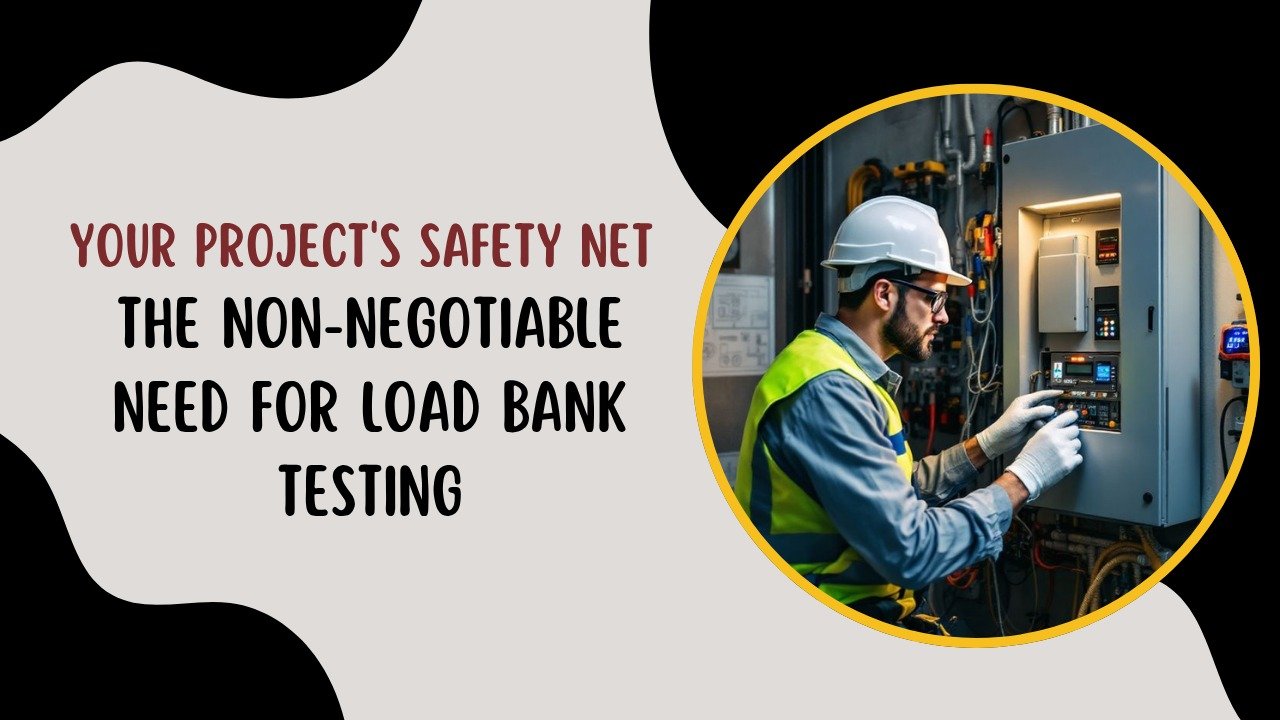
In the high-stakes world of construction and industry, you insure your assets, you secure your site, and you safety-check your equipment. Your backup power system should be no different. A Load Bank Test is the ultimate insurance policy for your generator. It’s the definitive proof that your last line of defense won’t crumble when you need it most.
At ARSL, we don’t just provide generators; we provide reliability. Our comprehensive Load Bank Services are designed to be your project’s safety net, ensuring that the kW power you depend on is there, without fail, 100% of the time.
Don’t wait for a crisis to reveal your generator’s weaknesses. Schedule your load bank test today and transform your backup power from a question mark into a guaranteed solution.
Contact ARSL now to book your professional load bank testing and secure your operations.