
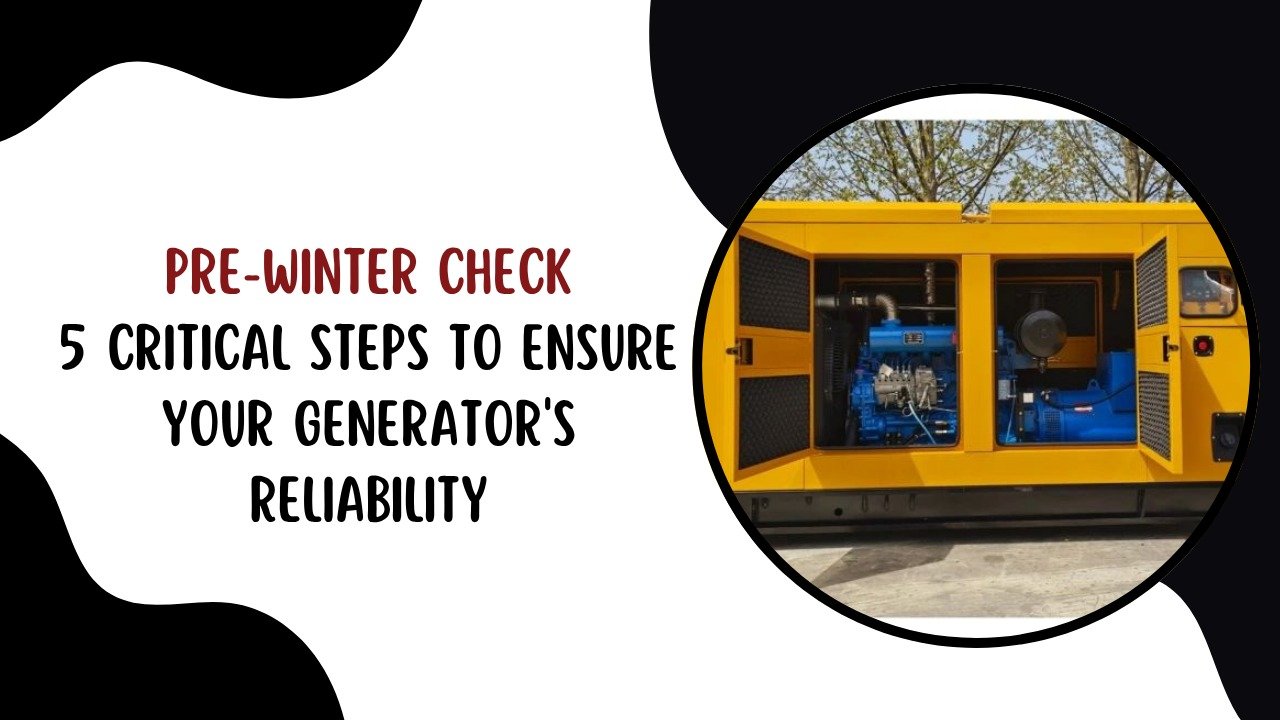
Introduction: Don’t Let the First Cold Snap Leave You in the Dark
There’s a certain chill in the air these mornings, isn’t there? The shift is subtle at first, but soon enough, the winter season will be in full swing. For many of us, that means cozy evenings, but for businesses, hospitals, data centers, and even homeowners, it signals the start of the most demanding season for power backups.
Winter in Pakistan doesn’t just bring fog and lower temperatures; it brings heightened grid instability. Increased heating loads, fog-related faults, and other seasonal issues often lead to more frequent and prolonged power outages. Your generator isn’t just a backup; it’s your primary defense against operational paralysis during these months.
The last thing you need is to hit the ‘start’ button during an outage only to be met with silence, sputtering, or failure. That’s why a proactive pre-winter check is not just a good idea—it’s a critical business imperative. This guide will walk you through five essential steps to ensure your kW generator services are winter-ready, protecting your operations, your data, and your peace of mind.
Why a Pre-Winter Check is Non-Negotiable
You wouldn’t drive your car through a mountain pass in winter without checking the brakes and tyres. Your generator deserves the same respect. Cold weather affects machinery in specific ways:
- Fuel Issues: Diesel can “gel” or wax in colder temperatures, clogging filters and fuel lines.
- Battery Failure: Cold cranking amps (CCA) are vital for startup. A battery that works fine in summer can fail utterly on a cold morning.
- Thickened Oil: Engine oil becomes more viscous in the cold, putting extra strain on the starter motor and battery during startup.
- Condensation: Temperature fluctuations can cause water to condense in the fuel tank, leading to microbial growth and corrosion.
A pre-winter check addresses these exact issues, transforming your generator from a potential liability into a pillar of reliability.
The 5-Step Pre-Winter Checklist for Your Generator
Follow these steps to ensure your generator, whether a critical 500 kW unit for an industrial plant or a smaller model for a commercial building, is prepared for the months ahead.
Step 1: The Fuel System Overhaul – Your Generator’s Lifeline
This is arguably the most critical step. Stale or contaminated fuel is the leading cause of generator failure.
- Inspect and Test the Fuel: Check the diesel for clarity and smell. If it’s dark, cloudy, or has a sour smell, it’s likely contaminated.
- Clean the Tank: Over time, water condensation and microbial growth (often called “diesel bug”) can accumulate. A professional fuel polishing service can clean the tank thoroughly, removing water and sludge.
- Use Winter-Grade Fuel & Additives: Consult your fuel supplier about winter-blend diesel, which has a lower cloud point. Additionally, use a reputable anti-gel fuel additive to prevent wax crystals from forming.
Pro Tip: For mission-critical applications, consider installing a kW generator services plan that includes scheduled fuel testing and polishing. This is one of the most effective ways to guarantee fuel integrity.
Step 2: Battery & Electrical System Health Check – The Heart of the Start
A generator with a dead battery is just a heavy, silent box.
- Load Test the Battery: Don’t just check the voltage with a multimeter. A professional load test measures the battery’s ability to hold voltage under the high demand of cranking the engine, simulating a cold start.
- Check Terminals and Cables: Ensure all connections are clean, tight, and free from corrosion. Even a small amount of resistance can prevent a start.
- Verify the Battery Charger: Ensure the float charger is functioning correctly to keep the battery at optimal charge levels.
Step 3: A Comprehensive Fluid Analysis – The Generator’s Blood Work
Your generator’s fluids tell a story about its health.
- Engine Oil: Check the level and condition. Change the oil and filter if it’s nearing its service interval. Consider switching to a lower-viscosity oil recommended by the manufacturer for colder climates.
- Coolant: Check the coolant level and its freeze protection rating (antifreeze strength). You don’t want the coolant freezing inside the engine block, which can cause catastrophic damage.
Step 4: A Full Load Test – The Ultimate Dress Rehearsal
Starting the generator and letting it run for 10 minutes is not enough. A proper test under load is essential.
- Simulate a Real Outage: Connect a load bank or your actual building load to bring the generator up to at least 70-80% of its rated kW capacity for 60-90 minutes.
- What to Watch For: During this test, monitor for smooth operation, stable voltage and frequency, proper coolant temperature, and no unusual noises or exhaust smoke. This test verifies that every component—from the engine to the alternator—can handle a real-world outage.
Step 5: The Physical Inspection – A Keen Eye for Detail
Sometimes, problems are visible to the naked eye.
- Check for Airflow Blockages: Inspect the area around the generator for leaves, debris, or anything that could restrict airflow to the radiator.
- Inspect Belts and Hoses: Look for cracks, fraying, or signs of wear on all belts and hoses.
- Examine the Exhaust System: Check for leaks, loose connections, or rust in the exhaust system.
When to Call the Professionals: The Value of Expert kW Generator Services
While some of these checks can be done in-house, a comprehensive pre-winter inspection by certified technicians is invaluable. A professional kW generator services team brings expertise, specialized tools (like load banks and battery analyzers), and a systematic approach that can uncover hidden issues you might miss.
At ARSL, our winter readiness service includes all these steps and more. We don’t just check boxes; we ensure your specific model and kW rating are perfectly tuned for the unique demands of a Pakistani winter. Schedule your pre-winter service with our experts today and ensure uninterrupted power.
Conclusion: Peace of Mind is the Best Winter Insurance
Winter is coming, but the anxiety of generator failure doesn’t have to. By taking these five proactive steps—focusing on fuel, battery, fluids, load testing, and a physical inspection—you transform your generator from a potential point of failure into the most reliable asset in your facility.
Don’t wait for the first major outage to discover a problem. Invest in a pre-winter check now and enjoy the peace of mind that comes from knowing you are prepared for whatever the season brings.