




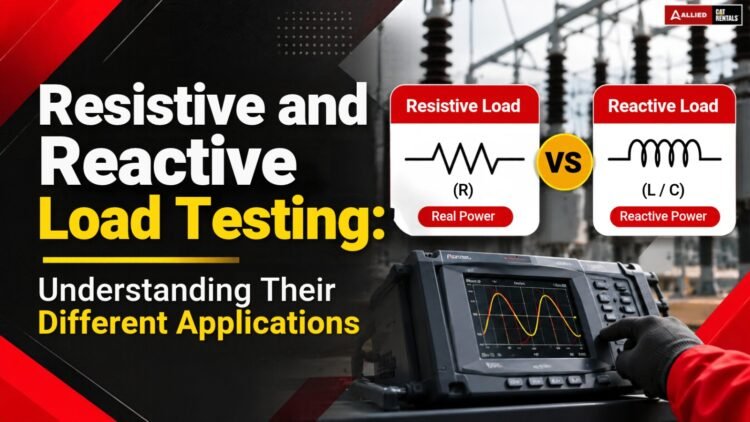
Electrical power systems are designed to support equipment and operations under different load conditions. However, installing a generator or backup power system is only one part of maintaining reliable performance. Testing is also important to understand how equipment responds when electrical demand is applied.
Load bank testing helps evaluate the performance of generators, UPS systems, and other power equipment under controlled conditions. Two commonly discussed approaches are resistive and reactive load testing. Although both are used to assess power system performance, they serve different testing requirements.
Understanding Resistive Load Testing
Resistive load testing evaluates a generator’s ability to supply real electrical power, measured in kilowatts (kW). A resistive load bank uses electrical resistance to convert supplied electrical energy into heat, creating an artificial load for the generator.
This testing method helps determine whether a generator can deliver its expected power output while maintaining stable operating conditions. It also allows technicians to observe important operating parameters, including voltage, frequency, and temperature, as the electrical load increases.
Resistive load testing is commonly used during generator commissioning and routine maintenance. It provides a controlled way to assess generator performance without depending on the actual electrical equipment connected to the system.
Understanding Reactive Load Testing
Reactive load testing evaluates how electrical equipment responds to reactive power, measured in kilovolt-amperes reactive (kVAR). Unlike resistive loads, reactive loads involve energy that is temporarily stored and returned through magnetic or electric fields.
Inductive reactive loads are particularly relevant when testing generators that supply equipment such as motors, transformers, and other inductive electrical systems.
This type of testing helps assess the generator’s ability to maintain voltage and respond to reactive power requirements. It also provides information about the performance of the alternator and voltage regulation system under different electrical conditions.
Reactive load testing is useful when a power system needs to be evaluated beyond its ability to supply real power alone.
Key Differences Between Resistive and Reactive Load Testing
Although both testing methods help evaluate electrical equipment, their applications are different.
Resistive Load Testing:
- Measures the generator’s ability to deliver real power in kW.
- Evaluates performance under a controlled electrical load.
- Helps assess voltage and frequency stability.
- Supports generator commissioning and maintenance testing.
Reactive Load Testing:
- Evaluates the generator’s response to reactive power in kVAR.
- Assesses voltage regulation under reactive load conditions.
- Helps evaluate performance when supplying inductive electrical equipment.
- Provides additional information about alternator performance.
In some applications, combined resistive and reactive load testing is used to create a more representative electrical load. This allows the generator to be evaluated under different power factor conditions.
Why Selecting the Right Load Bank Matters
Selecting an appropriate load bank depends on the equipment being tested and the purpose of the assessment. A generator that primarily needs real power output verification may require resistive testing, while systems that must support inductive loads may also require reactive testing.
The generator’s rated capacity, operating requirements, and testing objectives should be considered before selecting the testing equipment.
Proper load bank testing can help identify performance issues, verify equipment capacity, and provide useful information for maintenance planning. It is particularly important during generator commissioning, preventive maintenance, UPS testing, and emergency power system validation.
ARSL Load Bank Solutions
Allied Rental Services Limited (ARSL) provides load bank solutions for generator commissioning, preventive maintenance, mission-critical UPS testing, and emergency power system testing.
With load banks available up to 1050 kW, ARSL supports different industrial power testing requirements. These solutions help businesses evaluate their power equipment under controlled load conditions and assess its performance before it is required for critical operations.
Frequently Asked Questions
1. What is the main difference between resistive and reactive load testing?
Resistive testing evaluates real power output in kW, while reactive testing evaluates reactive power performance in kVAR.
2. Why is resistive load testing important for generators?
It helps verify whether a generator can deliver its expected real power output while maintaining stable operating conditions.
3. When is reactive load testing required?
Reactive testing is useful when evaluating generators that need to supply inductive electrical loads, such as motors and transformers.
4. What is a combined resistive and reactive load test?
It uses both types of loads to evaluate generator performance under different power factor conditions.
Conclusion
Resistive and reactive load testing serve different purposes in evaluating electrical power equipment. While resistive testing focuses on real power delivery, reactive testing examines how equipment responds to reactive power requirements. Understanding these differences helps businesses select appropriate testing methods for their generators and backup power systems.
Through its load bank solutions of up to 1050 kW, ARSL supports generator commissioning, maintenance testing, UPS testing, and emergency power system validation, helping businesses assess their power equipment under controlled conditions.