




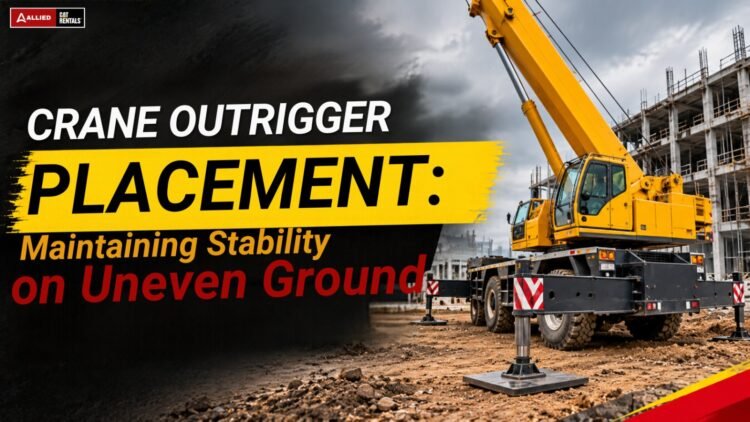
Crane operations require proper planning, particularly when lifting activities take place on uneven or challenging ground. Before beginning a lifting task, the positioning of the crane is an important consideration. Outriggers play a significant role in supporting crane stability during lifting operations, making their placement an essential part of site preparation.
For construction and industrial projects, understanding crane outrigger placement helps teams recognize the importance of stable equipment positioning and safe lifting practices.
Understanding the Role of Crane Outriggers
Outriggers are support components used to provide additional stability to cranes during lifting operations. They extend from the crane to create a wider supporting base, helping distribute the equipment’s weight and lifting forces.
Their placement becomes particularly important when cranes operate on uneven surfaces. An unsuitable setup can affect the crane’s stability and create difficulties during lifting activities. Proper positioning should therefore be considered before equipment is put into operation.
Challenges of Crane Operations on Uneven Ground
Construction sites and industrial facilities do not always provide perfectly level working surfaces. Ground conditions can vary across different sections of a project site, making crane positioning more challenging.
Some common considerations include:
Uneven Ground Surfaces: Differences in ground elevation can make it difficult to establish a stable crane position.
Limited Working Space: Construction and industrial sites may have restricted areas that affect where a crane can be positioned and its outriggers extended.
Changing Site Conditions: Ground conditions and available working areas may differ between project stages, requiring careful equipment positioning before lifting activities begin.
Lifting Requirements: Different lifting tasks involve different load requirements. Selecting suitable equipment and planning its positioning are important parts of the overall operation.
Importance of Proper Outrigger Placement
Correct outrigger placement contributes to maintaining crane stability during lifting operations. Before starting a task, the working area and ground conditions should be considered as part of the equipment setup process.
Crane positioning should also account for the available working space and the requirements of the lifting activity. Proper planning helps operators work within the intended operating conditions of the equipment.
For projects involving heavy lifting, experienced operators and suitable crane selection are equally important. These considerations support safer and more organized lifting operations across construction and industrial environments.
Choosing the Right Crane for Different Site Conditions
Not every project has the same lifting and site requirements. Some applications require equipment with road mobility, while others involve working in challenging off-road environments.
Allied Rental Services Limited (ARSL) provides crane rental solutions through its fleet of SANY cranes ranging from 20 to 160 tons. Its crane services include truck-mounted and rough-terrain crane solutions designed to support different project requirements.
ARSL also provides specially designed 10-ton and 12-ton self-loading trucks that combine lifting and transportation capabilities. Supported by skilled operators and a focus on safety and quality standards, its crane rental solutions serve various construction and industrial applications.
Frequently Asked Questions
1. What is the purpose of crane outriggers?
Crane outriggers provide additional support and stability during lifting operations by creating a wider supporting base for the equipment.
2. Why is outrigger placement important on uneven ground?
Uneven surfaces can affect crane positioning and stability. Proper setup is important for maintaining suitable operating conditions during lifting activities.
3. What should be considered before positioning crane outriggers?
Ground conditions, available working space, equipment requirements, and the nature of the lifting activity should be considered before crane operations begin.
4. What types of cranes does ARSL offer?
ARSL offers SANY crane rental solutions ranging from 20 to 160 tons, including truck-mounted and rough-terrain crane options.
5. Does ARSL provide operators with its crane rental services?
Yes. ARSL’s crane rental solutions are supported by skilled operators to meet different customer and project requirements.
Conclusion
Crane outrigger placement is an important consideration when preparing for lifting operations, especially on uneven construction and industrial sites. Understanding ground conditions, equipment positioning, and lifting requirements helps support stable and organized crane operations. With its range of SANY cranes, skilled workforce, and focus on safety and quality standards, Allied Rental Services Limited provides crane rental solutions for demanding lifting and transportation requirements.